
Carthage Court Docket Searches
The fastest Carthage court docket search begins with the document itself. A citation, summons, or prior filing usually names the court and the case number. Carthage Municipal Court owns city traffic and ordinance matters. A ticket from the Highway Patrol or the Leake County Sheriff that names Justice Court belongs with the county clerk instead, even when the stop happened inside Carthage. Circuit and Chancery filings sit at the Leake County courthouse. Keep the tools separate, too. The city calendar, the payment screens, the forms, and the ordinance links each do one job. None of them adds up to a full docket index for Carthage.
The official Carthage government page names the Municipal Court and offers city navigation. The city publishes no name-search or citation-number docket field. Do you need a number search? Ask the court clerk whether Carthage indexes by citation number, party name, date, or some other local field. For county-level electronic court records, PAMEC is the state public-access service. Registration and per-page charges apply.
- Read the Carthage citation or court paper for the issuing court, case or citation number, and appearance instruction.
- Use the official Carthage navigation for a city calendar, city form, or payment lead only when the paper names a city matter.
- Call the Carthage court or City Hall to confirm the current record holder, setting, and available lookup key before paying or traveling.
- If the paper names Leake Justice Court, Circuit Court, or Chancery Court, use that county route rather than a Carthage city contact.
- Request a plain or certified Carthage record from the court that holds it and ask for the cost before processing.
Note: A no-match in a calendar or payment screen proves nothing. The Carthage court record may still exist with the clerk.
Carthage Court Calendar Limits
The official Carthage calendar publishes city events. One entry is a Municipal Court Plea Day dated July 8, 2025 from 2 to 3 p.m. That confirms an event-calendar channel exists. It is not a docket export. The public event listed no case numbers, party names, charges, dispositions, or searchable list of matters. A plea-day title cannot confirm that an individual Carthage case is set, open, paid, or resolved.
The official Carthage calendar page shows how the city presents its event navigation.
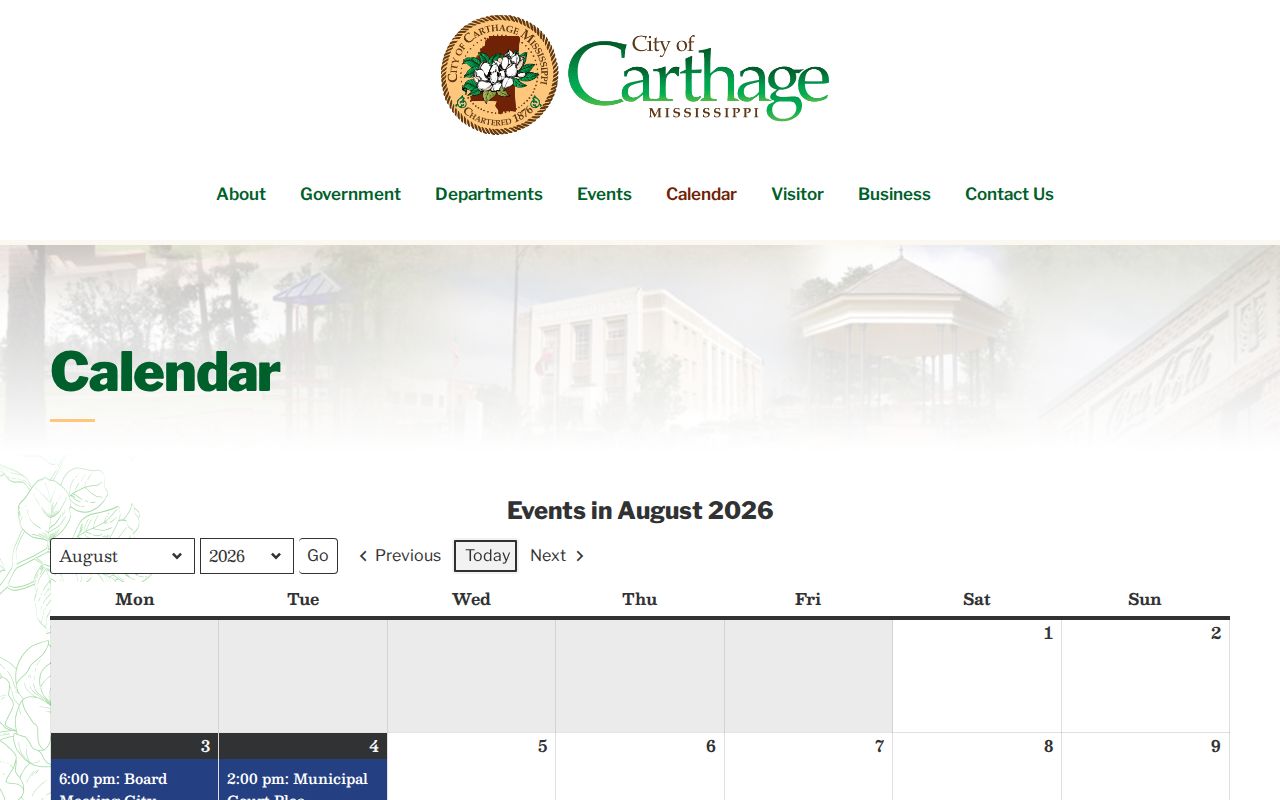
For a Carthage setting, the distinction to hold onto is simple. A public event notice is one thing, and the court record the clerk keeps is another. Does a Carthage date look uncertain? Give the clerk the case number and ask pointed questions. Ask whether the listing is a plea day or an individual setting. Ask whether a reset, continuance, or change appears in the clerk record. The city posts no daily docket, no full calendar filter, and no public setting feed. Those are gaps in verification. They are not proof that Carthage keeps no paper or staff-held record of your case.
Inside Carthage Municipal Court
Carthage Municipal Court is the city route for an ordinance or city traffic case. The city government page lists Municipal Judge Chris Collins. It also lists court clerk Cindy Middlebrooks and City Clerk Penny Spears. A 2025 Secretary of State municipal listing shows different court phone and fax details for the judge. The gap may just reflect separate City Hall and court lines. Call before trusting any name, number, payment destination, or mailing label for a Carthage request.
The official Carthage government source lays out the city-side court and clerk route.
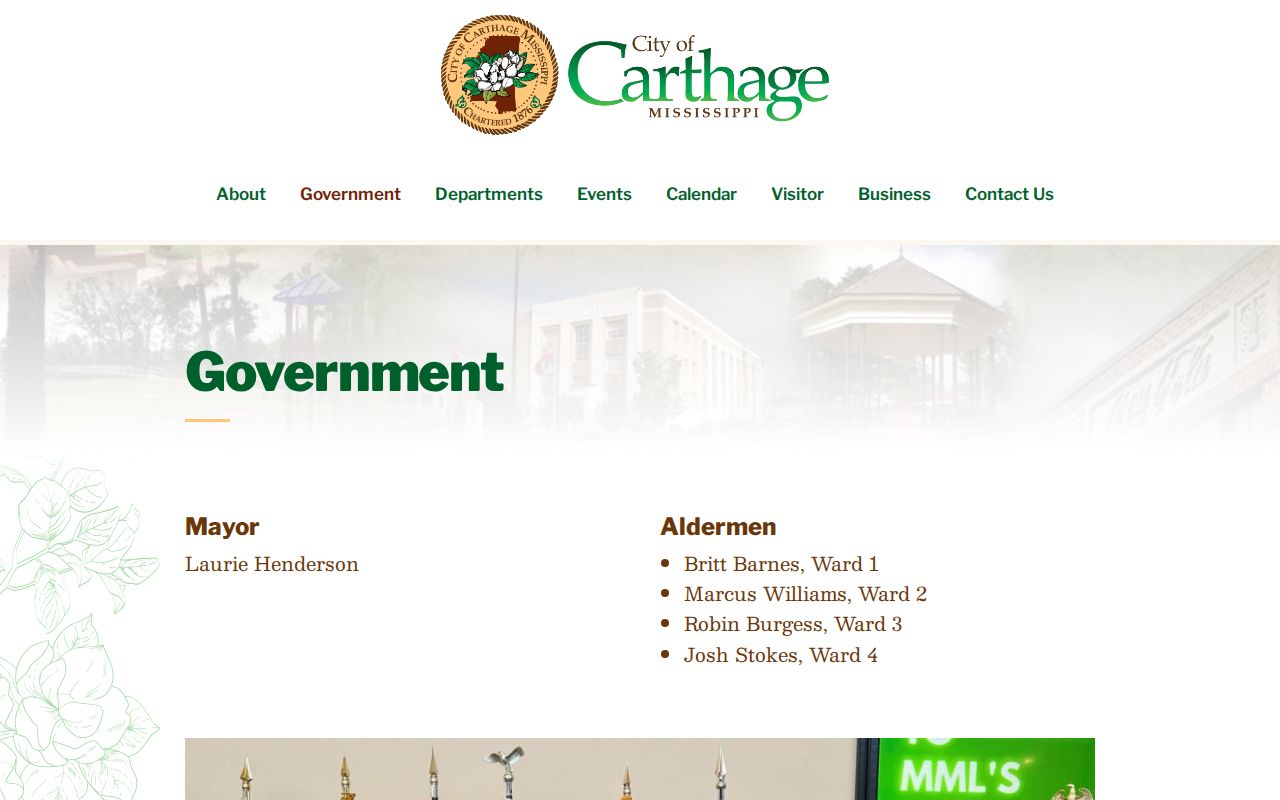
For a Carthage municipal record, that city source beats a vendor page with conflicting contact names. What can the record hold? A citation, a docket entry, a setting, a payment-related record, or a certified disposition. None of those swaps for an arrest or incident report held by law enforcement. None matches a Circuit or Chancery file at the courthouse, either. Tell the Carthage clerk exactly which product you need. A certified disposition is a different request from a city event listing or a payment receipt.
Carthage City and County Records
Carthage city records and Leake County court records share a place name but not a home. City ordinances, municipal citations, city minutes, and public city administrative records start with Carthage. A Justice Court citation, a felony, a broad civil matter, a divorce, an estate, a guardianship, or a land case follows the county court structure instead. The issuing court on the document controls. It matters far more than the Carthage address of a party, an officer, or the event itself.
| Record or event | Likely first route | Why the route differs |
|---|---|---|
| Carthage ordinance or city citation | Carthage Municipal Court or City Clerk | The city court controls its own municipal file. |
| Highway Patrol or Sheriff ticket | Leake Justice Court if named | The citation can be county-based even in Carthage. |
| Circuit criminal or civil case | Leake Circuit Clerk | City Hall does not keep the Circuit proceedings record. |
| Chancery domestic, estate, or land matter | Leake Chancery Clerk | Chancery has a separate subject-matter record inventory. |
The Leake Circuit Clerk source describes the general docket, orders, execution docket, and full proceedings record. That distinction matters when a Carthage case reached Circuit Court. A docket is a chronological register. A complete file can include motions, orders, and other documents.
Note: Carthage City Hall cannot stand in for the clerk. That clerk is the one who controls a county court file.
Finding Carthage Court Dates
Confirm any Carthage court date with the court itself. A city calendar blurb or an old payment notice is not proof of a hearing. Settings can appear under local labels, too. A listing might call itself a plea day. It might say appearance, trial, or compliance matter instead. What the city posts publicly is not a full Carthage docket with each case's date, time, courtroom, judge, and status. So call the clerk. Staff can tell you whether your matter still has an appearance date on the docket. They can also say whether a change has been entered since you last checked.
| Date | Ask the Carthage court whether a case-specific date is on file. |
|---|---|
| Time | Confirm whether the time is a docket call or an individual Carthage setting. |
| Location | Use the current Carthage court instruction, not an inferred courtroom location. |
| Judge | Confirm the current presiding official because public listings can change. |
| Setting type | Ask whether the Carthage entry is a plea, appearance, trial, compliance, or another event. |
County settings tied to Carthage run through the county clerk and the court administrator, not the city calendar. Leake Circuit term dates are another trap for the unwary. A term is a broad scheduling window, not a promise that your hearing sits inside it. Call the court named on your paperwork with any time-sensitive question. Treating a term date as confirmation of a Carthage hearing is a mistake worth avoiding.
Carthage Court Contact Checks
Carthage has a real contact-quality problem. The city government page names city court personnel, yet a linked payment vendor shows conflicting names. Do not quietly pick one. Before paying a fine, requesting a record, or showing up for an appearance, call City Hall at 601-267-8322 or the contact on the current official listing, and ask who holds the case, which contact method is current, and whether the payment route matches the citation. The vendor link reached through the official city navigation can lead you to payment, but it is not a Carthage docket search. A receipt proves money moved. It cannot replace a docket, a case disposition, a certified judgment, or a clerk's confirmation. Remember that payment can count as a guilty plea. If you plan to contest, or even wonder, confirm the Carthage procedure before typing in a citation number.
Verification point: Match the Carthage court name and citation number before payment, then ask how to obtain the authoritative disposition.
Carthage Traffic Ticket Lookups
Start any Carthage traffic ticket lookup with the court named on the ticket itself. A city-ordinance citation that lists Municipal Court belongs with the Carthage court. If the Mississippi Highway Patrol, Leake County Sheriff, or Leake Justice Court issued it, take the county route instead. Leake Justice Court posts 601-267-5677, and fines can be paid by phone at 1-877-597-8768. Its public page offers no citation-number search form, ticket-image viewer, online contest form, or local deferred-disposition schedule, so plan on a call or a visit.
Paying is not the same as pulling a Carthage court record. Ask first whether payment counts as a plea, whether an appearance date still stands, what costs are wrapped in, and how the disposition gets reported. Need a certified Carthage disposition? Request it separately from the clerk of the responsible court. The county-level routing and the two-custodian split are explained in Leake County traffic court records.
With no published online search field for Carthage tickets, a precise phone request works best. Give the citation number, the court, the date, and your question. Avoid broad name queries and third-party listings. A vague request can get routed to the wrong city or county office, which only slows down your docket search.
Carthage Docket Payment Boundaries
Sort out jurisdiction before touching any Carthage payment navigation. The city publishes a Pay Citation route. The county Justice Court posts its own payment instruction. Those two channels prove the point: a Carthage address does not decide where payment belongs. The controlling fields are the citation number, the issuing agency, and the court printed on the ticket. Never send a Justice Court citation through a city payment link just because the event happened in Carthage. The Carthage payment vendor view is a payment-only lead, and its names conflict with the official city government page.
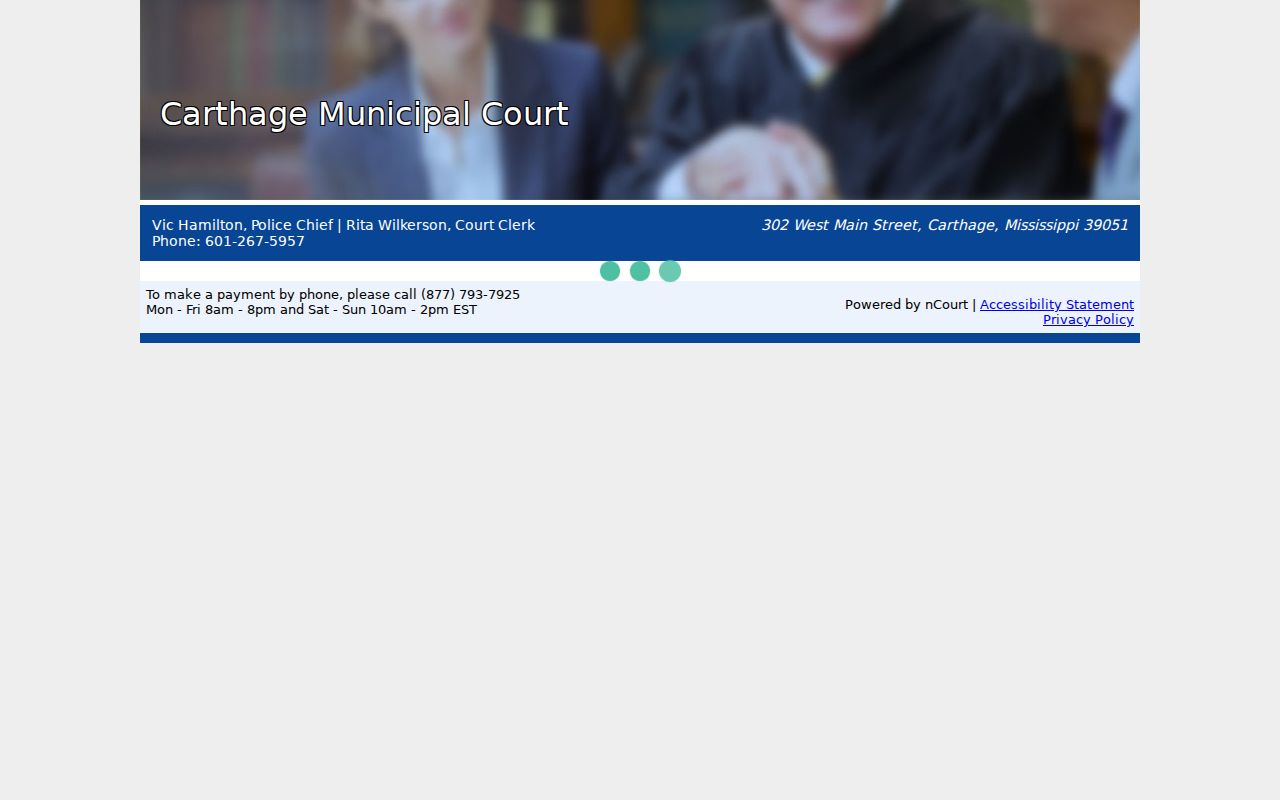
That vendor page proves no current Carthage court contact and no complete docket. City Hall verification still comes before payment. Keep your receipt whenever a Carthage payment record matters, and ask the court whether the docket has been updated. A receipt is an accounting document. A docket entry describes a court event. A disposition identifies the outcome. No universal Carthage payment deadline, contest process, or city fee schedule for court copies applies across the board, so confirm those details with the current court contact.
How Carthage Cases Reach the County
Where a Carthage case lands depends on its type, not just its address. City matters stay in Carthage Municipal Court. Justice Court picks up county traffic, DUI, misdemeanor, county-ordinance, and preliminary felony work. Once a felony is indicted, the case moves up. Broader Circuit business goes there too. The Circuit Clerk holds the court docket. The Chancery Clerk handles divorce, custody, estate, guardianship, land, and equity filings. So a Carthage place name alone tells you little. The court type decides where the court records live.
Docket flow: Carthage Municipal Court › Leake County Courts › Circuit Court
The MDAH historic-district inventory documents the county courthouse setting in Carthage.
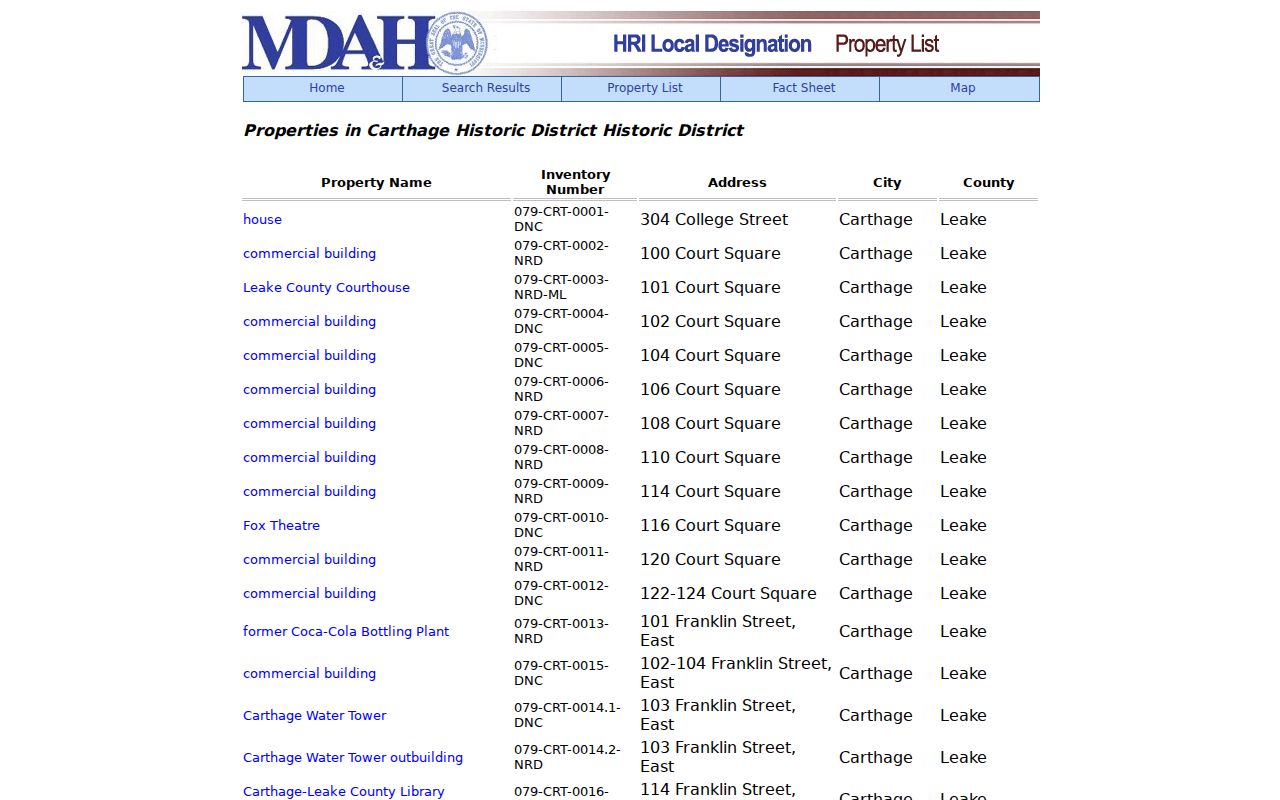
The inventory offers location and historic-district context only. It says nothing about current security, parking, or accessibility at the courthouse. When a Carthage case seems to have rolled into the county system, the Leake County court docket overview walks through the Circuit, Chancery, Justice, PAMEC, and clerk routes. City-level sources never add up to a single county docket.
Carthage Record Requests by Subject
Carthage stands out for having the county's clearest written city public-record request procedure. The Carthage request form and policy allows one subject matter per request. Be precise. The form wants a clear description of the record and your delivery preference. It also asks whether you want a certified copy and for contacts at other agencies. Add your signature, printed name, title, and date. Send it to the City Clerk at 212 W. Main Street, Carthage, MS 39051. Mark the envelope or transmission as a public-record request. That way it lands in the right hands.
That workflow suits a Carthage municipal administrative record, minutes, ordinances, or another city-held item. A state court file is different. The Circuit, Chancery, and Justice Court clerks hold those, not the city form. For a Carthage municipal court request, ask the court first. Confirm whether the City Clerk form is still the right route. Also ask whether a certified disposition calls for a separate court request.
| Carthage city request item | Published policy amount |
|---|---|
| Labor for locating or processing | $16 per hour |
| Photocopies | $0.75 per page |
| Certification | $10 per request |
| Minutes and ordinances | $5 per page plus applicable search fees |
City policy promises an acknowledgment, estimate, approximate date, and location within seven business days where it applies. Those terms stop at the city line. They do not set Circuit, Chancery, Justice Court, transcript, or federal-record fees. Ask each Carthage or county custodian for the price of the exact record. Do that before you order it.
Who Can See Carthage Court Records
Mississippi public-record rules open the door to many Carthage municipal and city administrative records. Court access, though, has its own limits. Start with two questions. What kind of Carthage record is it, and which office holds it? A city calendar event counts as public information. Yet it is not a full case file. A municipal court docket may look complete. It can still say little about the papers filed behind it. Youth Court files and sealed or restricted state-court categories are never ordinary public downloads.
Key rules:
Mississippi Public Records Act: helps route Carthage city administrative records, subject to lawful exemptions, costs, and redaction.
Mississippi judiciary public-records policy: court-file access follows court law and rules rather than the ordinary agency request timetable.
Leake Youth Court information: youth matters require confidentiality protections and should not be treated as a public Carthage search category.
When a Carthage clerk cannot release an item, ask about alternatives. A redacted copy may still be open to you. So may the docket text, or a lawful request process. Treat what you see with care. A payment result, a city event listing, or an item missing from public view is not proof of a person's case status.
Carthage Court Record History
Carthage court research often runs on two tracks. One is a current city route. The other is a historical county route. MDAH places the Leake County Courthouse at 101 Court Square, inside the Carthage Historic District. Older county materials may sit in the MDAH Leake catalog and finding aid. They may not appear in any current electronic search. The courthouse setting matters. Still, the historic listing says nothing definitive about a full building history, a public terminal location, or visitor rules. For county-level Circuit court records, the official Leake Circuit Clerk page is the Carthage route. It shows the office that handles those filings.
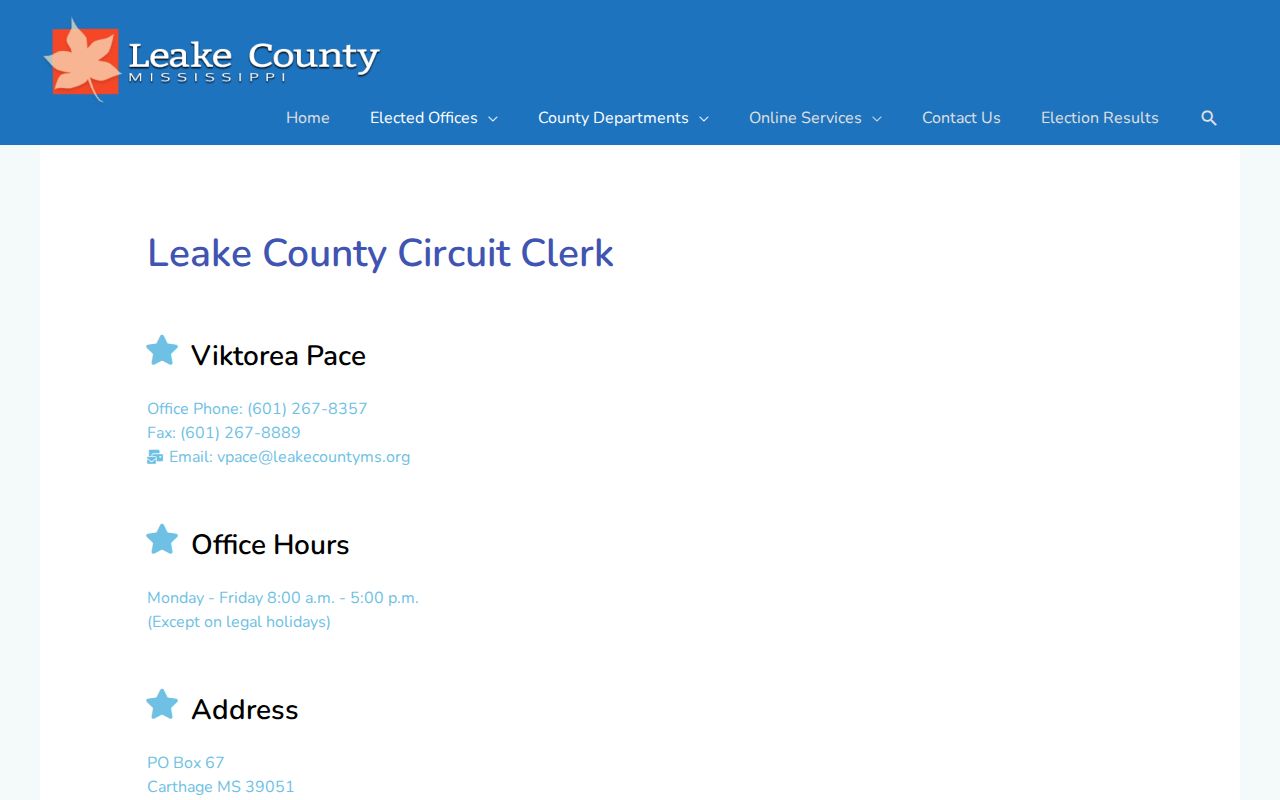
A Carthage city matter and a county Circuit file live with different custodians. The Circuit Clerk page makes that split plain. It offers a separate Carthage county court access route for Circuit records. The electronic picture varies by court. Circuit MEC lists a Leake go-live date of August 12, 2024. Chancery MEC, by contrast, went live back in 2015. So a Carthage historical record could be paper, microfilm, legacy material, or electronic. It depends on the court and the date. When you ask for one, preserve the case number, court, date range, and any archive roll number.
Note: Call ahead before a Carthage courthouse visit. The county publishes no details on public terminals, parking, security, or accessibility procedures.